Protective Handrail: Advantages, Limitations and How to Choose the Right Wall Protection Solution
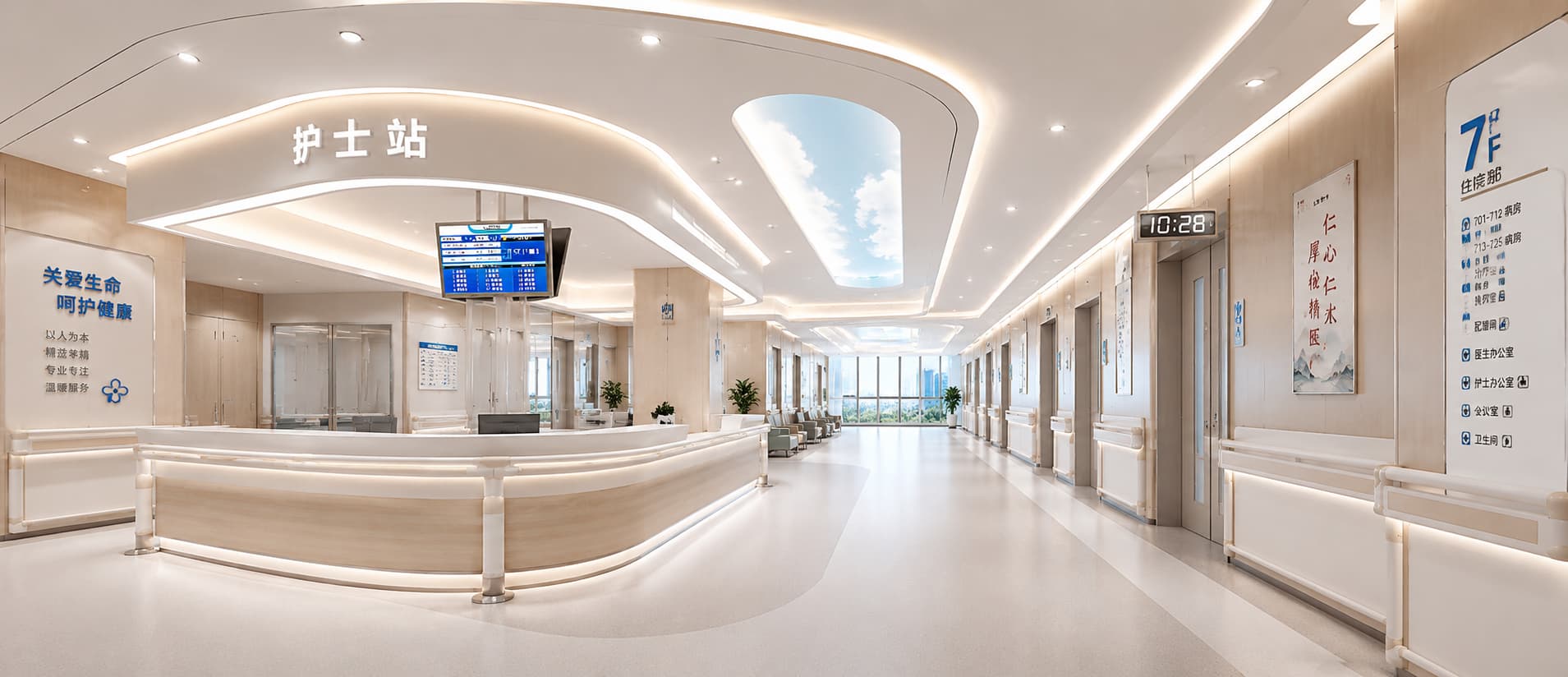
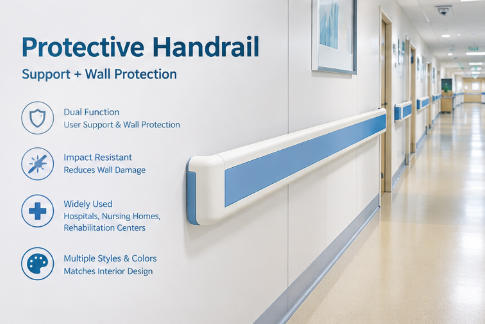
A protective handrail is more than a support bar. In hospitals, nursing homes, rehabilitation centers, schools and other public buildings, it can provide both user support and wall protection.
A well-designed handrail system helps people maintain balance while also reducing the risk of walls being damaged by wheelchairs, carts and daily traffic.
Key Advantages of Protective Handrails
1. Dual Function: Support + Wall Protection
One of the biggest advantages is the combination of two functions.
The handrail can provide users with a stable surface to hold while the integrated wall protection system helps reduce damage caused by:
-
Wheelchairs
-
Medical carts
-
Trolleys
-
Beds
-
Luggage carts
-
Daily pedestrian traffic
2. Suitable for Healthcare Environments
Protective handrails are widely applicable to:
-
Hospitals
-
Clinics
-
Nursing homes
-
Elderly care facilities
-
Rehabilitation centers
-
Assisted living facilities
They can be installed along corridors, patient rooms, ramps and other areas where users need additional support.
3. Long-Term Wall Protection
Replacing damaged walls can create ongoing maintenance costs.
A properly designed wall protection system can help reduce scratches, impact damage and surface deterioration, potentially lowering long-term maintenance requirements.
4. Professional Appearance
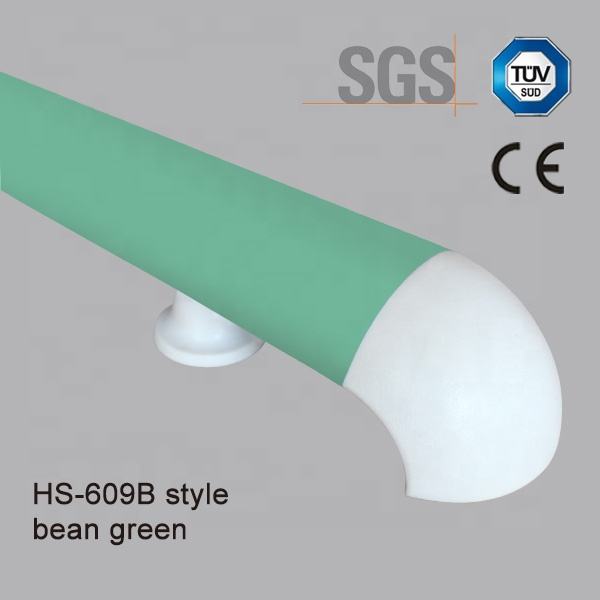
Modern protective handrails are available in different colors, profiles and surface finishes.
This allows architects and contractors to coordinate the handrail with the overall interior design rather than treating it as purely functional equipment.
What Are the Limitations?
Protective handrails require proper installation and suitable wall structures.
They may also have a higher initial cost than a simple grab bar or conventional decorative handrail.
For areas where wall impact is not a concern, a basic handrail may be sufficient.
Protective Handrail vs. Standard Handrail
| Feature | Protective Handrail | Standard Handrail |
|---|---|---|
| User support | Excellent | Good |
| Wall protection | Yes | Usually limited |
| Wheelchair impact protection | Better | Limited |
| Healthcare applications | Excellent | Good |
| Design options | More | Basic |
| Initial investment | Medium to high | Low to medium |
| Long-term protection | Excellent | Limited |
How to Choose a Protective Handrail
For contractors, architects and distributors, important factors include:
-
Handrail diameter and profile
-
Wall protection performance
-
Impact resistance
-
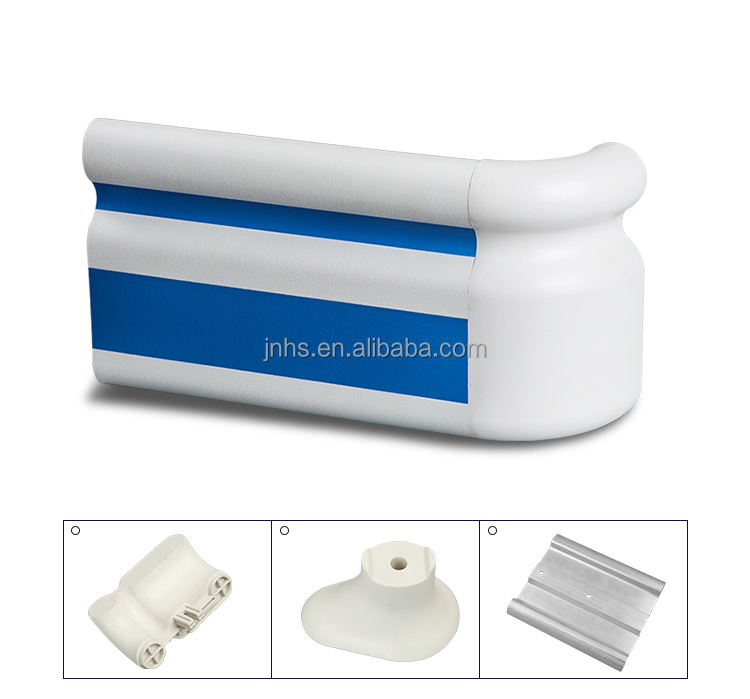
Aluminum or reinforcement structure
-
PVC/resin cover material
-
Bracket strength
-
Installation method
-
Fire performance
-
Antibacterial options
-
Color selection
-
Project customization
-
Factory production capability
Why Protective Handrails Are Valuable for B2B Projects
For hospitals, nursing homes and rehabilitation facilities, the cost of wall repairs can accumulate over years.
A complete handrail + wall protection system can therefore provide a more practical long-term solution than installing a basic handrail alone.
For distributors and engineering companies, protective handrails can also be combined with wall protection boards, corner guards and door protection products to create a complete architectural wall protection solution.
The Right Solution Depends on the Project
There is no single best handrail for every building.
A hospital corridor may require stronger impact protection and antibacterial surfaces, while a hotel or residential project may place greater emphasis on appearance and cost.
The best protective handrail balances safety, durability, wall protection, appearance and installation requirements.
For manufacturers, distributors, contractors and engineering companies, offering a complete protective handrail solution can create a stronger product line for healthcare, elderly-care, hospitality and commercial construction markets.





 IPv6 network supported